

正文
C++实现Prim算法

 提示:扫一扫查出行
【扫一扫了解最新限行尾号】
复制提示
闲来无聊,前两天看到一篇关于算法实现的文章。里面又关于图的各种算法介绍,正好上学期还学过图论,现在还记得一点点,先来实现个prim算法:
表示图的文件的内容大体上是这样的:
 2.0    1.0    1.0

 3.0    1.0    1.0

 4.0    1.0    1.0

 5.0    1.0    1.0

 6.0    1.0    1.0

 7.0    1.0    1.0

 8.0    1.0    1.0

 9.0    1.0    1.0

 11.0 1.0 1.0

 12.0 1.0 1.0

 13.0 1.0 1.0

 14.0 1.0 1.0

 18.0 1.0 1.0

 20.0 1.0 1.0

 22.0 1.0 1.0

 32.0 1.0 1.0

 34.0 10.0 1.0

 34.014. 1.0

 33.0 15.0 1.0

 34.0 15.0 1.0

 33.0 16.0 1.0

 34.0 16.0 1.0

 33.0 19.0 1.0

 34.0 19.0 1.0

 3.0    2.0    1.0

 4.0    2.0    1.0

 8.0    2.0    1.0

 14.0 2.0 1.0

 18.0 2.0 1.0

 20.0 2.0 1.0

 22.0 2.0 1.0

 31.0 2.0 1.0

 34.0 20.0 1.0

 33.0 21.0 1.0

 34.0 21.0 1.0

 33.0 23.0 1.0

 34.0 23.0 1.0

 26.0 24.0 1.0

 28.0 24.0 1.0

 30.0 24.0 1.0

 33.0 24.0 1.0

 34.0 24.0 1.0

 26.0 25.0 1.0

 28.0 25.0 1.0

 32.0 25.0 1.0

 32.0 26.0 1.0

 30.0 27.0 1.0

 34.0 27.0 1.0

 34.0 28.0 1.0

 32.0 29.0 1.0

 34.0 29.0 1.0

 4.0    3.0    1.0

 8.0    3.0    1.0

 9.0    3.0    1.0

 10.0 3.0 1.0

 14.0 3.0 1.0

 28.0 3.0 1.0

 29.0 3.0 1.0

 33.0 3.0 1.0

 33.0 30.0 1.0

 34.0 30.0 1.0

 33.0 31.0 1.0

 34.0 31.0 1.0

 33.0 32.0 1.0

 34.0 32.0 1.0

 34.0 33.0 1.0

 8.0    4.0    1.0

 13.0 4.0 1.0

 14.0 4.0 1.0

 7.0    5.0    1.0

 11.0 5.0 1.0

 7.0    6.0    1.0

 11.0 6.0 1.0

 17.0 6.0 1.0

 17.0 7.0 1.0

 31.0 9.0 1.0

 33.0 9.0 1.0

 34.0 9.0 1.0
注意,从左到右分别是当前节点,连接的节点,边的权重,下面首先就是设计数据结构了:
 class Pair {        //pair代表了与某个点相连的一条边的权重

 private:            //,以及和这条变相连的另一个顶点是哪个

     double edge_weight;

     int adacent_vertex;

 public:

     Pair(int, double);

     double weight() const;

     int vertex() const;

 };
上面的pair代表一个点相邻的边的权重以及这条边与哪一个顶点是相连的。
 class Node { //代表了一个节点,其包含的信息有与其相连的

 private:     //某一条边的权重以及和这条边相连的另一个顶点。

     Pair element;

     Node *next_node;

 public:

     Node(Pair e, Node * = NULL);

     Pair retrieve() const;

     Node *next() const;

 };
代表一个节点,注意这个节点的next_node的值与相邻节点没有任何关系,只是代表链表的下一个节点,下面介绍的是链表:
 class List { //List中存放的是每个具体的节点,

 private:     //每个节点后面的链表代表的是与其相邻接的节点

     Node *list_head;

 public:

     List();

     // Accessors

     bool empty() const;

     Pair front() const;

     Node *head() const;

     void push_front(Pair);

     Pair pop_front();

     void print();

 };
下面的cell实际上代表的就是一颗生成树了:
 class Cell { //cell代表的就是一个具体的生成树了

 private:

     bool visited;

     double distance;

     int parent;

 public:

     Cell(bool = false, double = INFTY, int = );

     bool isvisited() const;

     double get_distance() const;

     int get_parent() const;

 };
-----------------------------------------------------------------------------------------------------------
下面是数据结构的具体定义了:
 #include "structure.h"

 Pair::Pair(int e, double m) :

 edge_weight(m),

 adacent_vertex(e) {

     // empty constructor

 }

 double Pair::weight()const {

     return edge_weight;

 }

 int Pair::vertex()const {

     return adacent_vertex;

 }

 Node::Node(Pair e, Node *n) :

 element(e),

 next_node(n) {

     // empty constructor

 }

 Pair Node::retrieve() const{

     return element;

 }

 Node *Node::next() const {

     return next_node;

 }

 List::List() :list_head(NULL) {

     // empty constructor

 }

 bool List::empty() const {

     if (list_head == NULL) {

         return true;

     }

     else {

         return false;

     }

 }

 Node *List::head() const {

     return list_head;

 }

 Pair List::front() const {

     if (empty()) {

         cout << "error! the list is empty";

     }

     return head()->retrieve();

 }

 void List::push_front(Pair e) {

     if (empty()) {

         list_head = new Node(e, NULL);

     }

     else {

         list_head = new Node(e, head());

     }

 }

 Pair List::pop_front() {

     if (empty()) {

         cout << "error! the list is empty";

     }

     Pair e = front();

     Node *ptr = list_head;

     list_head = list_head->next();

     delete ptr;

     return e;

 }

 void List::print() {

     if (empty()) {

         cout << "empty" << endl;

     }

     else {

         for (Node *ptr = head(); ptr != NULL; ptr = ptr->next())

         {

             cout << "<" << ptr->retrieve().vertex() << " " << ptr->retrieve().weight() << "> ";

         }

         cout << endl;

     }

 }

 Cell::Cell(bool v, double d, int p) :

 visited(v),

 distance(d),

 parent(p) {

     // empty constructor

 }

 bool Cell::isvisited() const {

     return visited;

 }

 double Cell::get_distance()const {

     return distance;

 }

 int Cell::get_parent()const {

     return parent;

 }
好了有了上面的数据结构,实现Prim算法就比较简单了:
 Cell* Prim(List * graph, int n, int start)  //传入一个邻接数组,以及数组的大小,

 {                                            //以及邻接矩阵的起始点,求一个最小生成树

     Cell* Table = new Cell[n + ]; //n+1的目的是节点是从1开始数的,所以要多添加一个

     //Table[start]=Cell(false,0,0);//这里的false是否换成True会好一点?

     Table[start] = Cell(true, , );

     /* 实现prim算法*/

     int currMinNode, currParent = ;

     double currMin;

     for (;;){

         currMin = INFTY; //注意这个的类型是double类型

         currMinNode = ;

         currParent = ;

         for (int i = ; i <= n; ++i){

             if (Table[i].isvisited()){//已经被访问过了

                 Node * currNode = graph[i].head();

                 while (currNode != NULL){ //从该节点开始,然后访问其所有的邻接的节点

                     int tmpNode = currNode->retrieve().vertex();

                     double tmpWeight = currNode->retrieve().weight();

                     if (!Table[tmpNode].isvisited() && tmpWeight < currMin){

                         currMin = tmpWeight;

                         currMinNode = tmpNode;

                         currParent = i;

                     }

                     currNode = currNode->next(); //取下一个邻接的节点

                 }

             }

             else

                 continue;

         }

         Table[currMinNode] = Cell(true, currMin, currParent);//找到下一个节点,将其置为True

         if (currMinNode == ) //如果所有的节点都已经遍历完毕的话,就停止下一次的寻找

             break;

     }

     return Table;

 }
顺手写个打印生成树的函数:
 void PrintTable(Cell* Table, int n)

 {

     for (int i = ; i <= n; i++)

         cout << Table[i].isvisited() << " " <<

         Table[i].get_distance() << " " <<

         Table[i].get_parent() << endl;

 }
主函数如下所示:
 #include "structure.h"

 #include "Prim.h"

 int main()

 {

     List * graph = new List[N];

     char *inputfile = "primTest.txt";

     ifstream fin; //输入文件 .join后结果

     int n = ;

     double x, y, w;

     fin.open(inputfile);

     while (!fin.eof())

     {

         fin >> x >> y >> w;

         Pair a(y, w);

         Pair b(x, w);

         graph[int(x)].push_front(a);

         graph[int(y)].push_front(b);

         if (n <= x)

             n = x;

         if (n <= y)

             n = y;

     }

     fin.close();

     cout << "The total Node number is "

         << n << endl;

     for (int i = ; i <= n; i++)

         graph[i].print();

     Cell* Table = Prim(graph, n, );

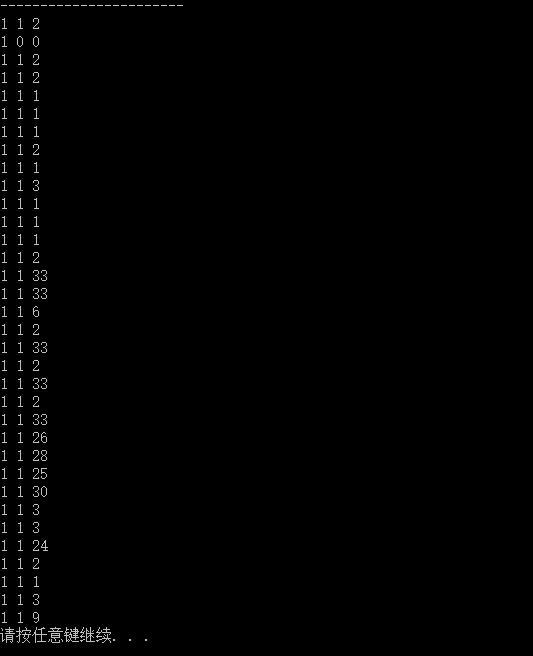
     cout << "-----------------------\n";

     PrintTable(Table, n);     return ;

 }
最后的结果如下所示:
写的有点乱,见谅见谅
其实这个也可以实现Dijkstra算法,那个好像没学过,看看以后有时间再来写。


